Search This Blog

Showing posts with label WW2. Show all posts

Thursday, 9 December 2010

Memorial on Great Carrs

Throughout Cumbria there are hundreds of sites where aircraft have crashed over the years. Some of these were civilian but most were military. Of the latter a significant number fell to earth during the second world war.

Perhaps the most famous crash site is that on Great Carrs, a wild fell lying to the south of Wrynose.


On the night of October 22 1944 Handley Page Halifax LL505 FD-S was on a night training exercise flying out of RAF Topcliffe, Yorkshire. It was part of 1659 Heavy Conversion Unit in No 6 Group, Bomber Command. 

On the fateful night Pilot John Johnston flew low over the hills in an easterly direction so that the navigator could get a ground fix. However, the aircraft hit the ridge between Great Carrs and Swirl How before plunging over the crest. All 8 crew were killed.


 The crew were:

Pilot - F/O John A Johnston, RCAF (C/29783), aged 27, of Carp, Ontario, Canada.

Navigator - F/O Francis A Bell, RCAF (J/39888), aged 33, of Hampton, New Brunswick, Canada.

BA - P/O Robert N Whitle, RCAF (J/38243), aged 20, of Regina, Saskatchewan, Canada.

Flight Eng - Sgt Harvey E Pyche, RCAF (R/225354), aged 21, of New Glasgow, Nova Scotia, Canada.

Flight Eng - Sgt William B Ferguson, RAFVR (1826294), aged 19, of Caldercruix, Scotland.

Wireless Op / AG - Sgt Calvin G Whittingstall, RCAF (R/198207), aged 20, of Mount Dennis, Ontario, Canada.

AG - Sgt Donald F Titt, RCAF (R/271259), aged 19, of Rockwood, Ontario, Canada.

AG - Sgt George Riddoch, RCAF (R/259938), aged 20, of Sarnia, Ontario, Canada.

Ferguson was buried at New Monkland Cemetery, Lanarkshire. The rest of the crew were buried together at Blacon cemetery, Chester.

 At some time a cairn was constructed on Great Carrs and bits of the aircraft brought to it, specifically the under carriage. More recently a memorial plaque was placed at the site.


Sunday, 5 December 2010

The dispossessed

We in Britain celebrate victories over our enemies, the Axis & Japan, in 1918 & 1945. But we lament the loss of influence in the world, moving from global superpower to American poodle, by way of Suez & Butcher Blair. And while watching a stiff upper lipped Sir John Mills winning the battle we give little thought, beyond sometimes rather tasteless jokes, to the defeated peoples. The systems they fought for, certainly between 1939-45, were truly evil Empires. Russian POWs, Poles, Gypsies, Gays, Jews, Far East POWs, Chinese, the natives of many Asian countries and myriad others will affirm that. So it was OK to defeat them.

But I am reminded sometimes of how we, the Allies, behaved like Avenging Angels. The true purpose behind the bombing of the ancient towns of Germany or Japan has yet to be honestly addressed.


Mediaeval Konigsberg was one such, bombed in 1944. The historic districts of Altstadt, Löbenicht and Kneiphof was obliterated, with the dome, castle, university (old and new), the old quarter and all the churches blown away. So much of Europe's achievement was destroyed for little or no gain.
What a price to demand of our foes.

In those acts we, the victors, stand accused. 

Nor did it stop there.... 

Germany lost so much. Only through Google Earth did I come to fully realise that East Prussia was entirely stripped from the country. Indeed after 1945 Konigsberg became Kaliningrad, a wholly Russian Oblast, fully endorsed at Potsdam by Churchill, Roosevelt & Stalin. It is now as Russian as Moscow or Volga/Stalin-grad. It was ethnically cleansed. The entire surviving German population of more than 200,000 was forcibly expelled by the Russians in 1945/6 and the great city and its landscape was resettled by Russians, Byelorussians & Ukrainians. Today only some 0.6% of the people are of German  ethnicity

And its German heritage, the churches, great houses and villages, in the landscape for 700 years, crumble to dust. Such is the stuff of history.


 In the former German village of Mulden, now Russian Perelavo, the Lutheran village church stands abandoned & derelict - how very sad.

The former home of a Prussian landowner has no name.

There must be a deep wound in the German soul - to have lost so much.


But as I browse the thousands of pics on Google Earth I am suddenly presented with the grief of and for the common soldier - the tools of politician's weird Messianic visions.

The German army fought like lions to hold Konigsberg, to allow the evacuation of its women & children. In so doing it suffered horrendous casualties.


In a wood some miles south of Kaliningrad city, close to a ruined castle, there are these two crosses, with very German wreaths. On one is a rusting German helmet. Both crosses are new, made from a length of silver birch. There appear to be name tags. Who are these guys? Is it one of the mass graveyards ploughed over on Stalin's orders after 1945 or just a couple of guys who died for their mates & their country? Dunno.

But they are remembered. By grieving family? Or by ethnic Germans, some of the 0.6% honouring their country's dead? Or treasure seeking Russians?

I found this a deeply moving image.

Sunday, 21 November 2010

A hazardous operation

This blog owes a great deal to Mr Andy Moss; as I have researched memorials he has researched the names - at astonishing length! Some of the stories he has come up with are extraordinary.

I have barely covered Barrow memorials in either my researches or in this blog - a fact that I regret. But the probable numbers of them and the fact that all the churches and chapels in the town are locked makes the task rather daunting.


There are hundreds of names on Barrow's war memorials, specifically that in Barrow Park, the towns primary place of commemoration.

One name has a remarkable tale attached; that of Flying Officer (navigator) Alfred John Baythorp, RAFVR, who died on July 14, 1944 while flying aboard RCAF Handley Page Halifax JN 888 of 624 (Tiger) squadron out of Blida, North Africa. The aircaraft crashed high in the Pyrenees, above the town of Nistos, while engaged in the dropping of supplies to the French Resistance. 


624 was a special squadron that conducted clandestine operations over France, Yugoslavia, and other occupied countries in Europe. From its base in northern Algeria, it utilised the long range and large load capacity of the Halifax to drop weapons, ammunition, radios, supplies and agents to local resistance units. The details of flights by other crews provide further hints about the nature of the operations: 

"Not successful–incorrect reception at Panane;" "Not successful–no recognition at Diddle...;" "Successful at Accorduer–stores dropped; reception doused at other targets; nickels (leaflets) dropped;" and at Taille Crayon "Successful–15 agents and stores dropped."


Halifax JN 888 was piloted by PO Leslie Arthur Peers of Chatham, Ontario a married man of 27 and father of a young son. To fulfill their missions Peers had to fly at very low level and on the night of July 14, 1944 was flying over the peaks and forests of the Pyrenees peparing to drop supplies to a group of Maquis.

Let the Mayor of Nistos tell the story ...(left click mouse)


The men were buried in a clearing close to the crash site and after the war the CWGC decided that the bodies were too inaccessible to be recovered so they were left where they lay, on beds of French bracken. In 1994 the Canadians and the French built a permanent memorial garden which is maintained by local people who continue to have a great reverence for the men, who died for The Liberty of France.


Apart from Baythorp & Peers the other crew were as follows:

BROOKE, Sergeant JACK, 1451393. 624 Sqdn. Royal Air Force Volunteer Reserve. 14th July, 1944. The Runnymede Memorial.

CLARKE, Sergeant HARRY, 1592499. 624 Sqdn. Royal Air Force Volunteer Reserve. 14th July, 1944. Age 22. Son of Harry and Elsie Clarke, of Sheffield. The Runnymede Memorial.

GOBLE, Sergeant CHARLES SPENCER, 145381. 624 Sqdn. Royal Air Force Volunteer Reserve. 14th July, 1944. Age 21. Son of David and Clarice Alma Goble, of Portsmouth. The Runnymede Memorial.

WALSH, Sergeant JAMES EDWARD, 1652695. 624 Sqdn. Royal Air Force Volunteer Reserve. 14th July, 1944. Son of John and Ann Walsh; husband of Elsie May Walsh, of Grange, Cardiff. The Runnymede Memorial.

WHARMBY, Sergeant WILLIAM RONALD, 1248157. 624 Sqdn. Royal Air Force Volunteer Reserve. 14th July, 1944. Age 23. Son of William and Florence Wharmby; husband of Jessie Elizabeth Wharmby, of Bulwell, Nottinghamshire. The Runnymede Memorial. 

 The crew of RCAF Halifax JN 888.

Sunday, 19 September 2010

Quaker War Memorial from Wigton!

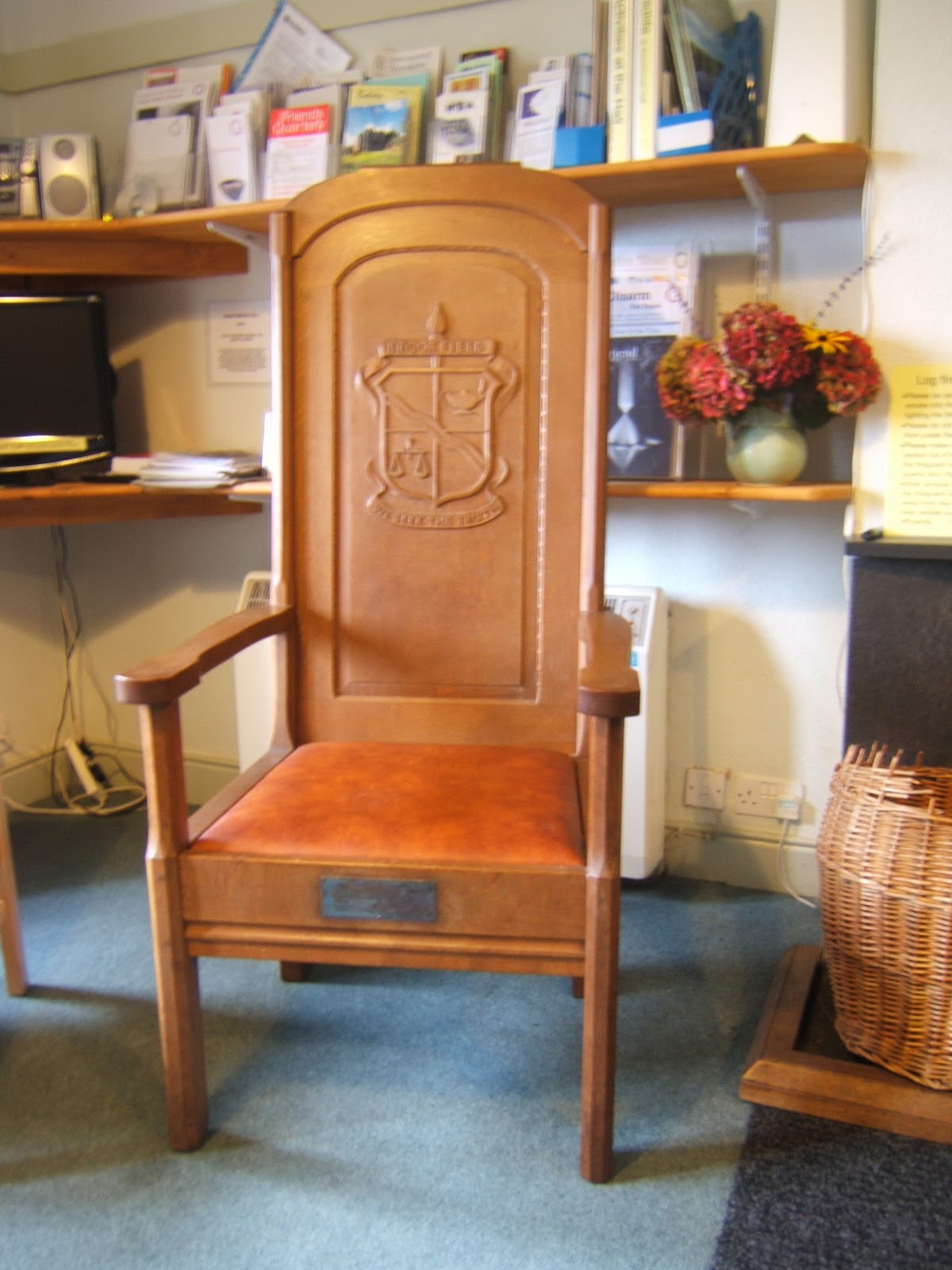
I guess the idea of a Quaker war memorial seems a bit odd - but two have turned up and one, a chair, has come to a temporary rest at Swarthmoor Hall while a permanent home is found.


The memorials were at Brookfield School, Wigton, a Quaker school founded in 1815. The premises were originally at Highmoor and moved to Brookfield in 1827. The school closed in 1984 and passed out of Quaker hands. It was presumably at this time that the memorials were removed, I believe, to Wigton Meeting House.

The chair bears a plaque naming the old boys of Brookfield School who died between 1939 - 45.


The men named:

Rowland S Armstrong is named on the CWGC website as Roland Scott Armstrong, son of George Lee & Margaret of Carlisle. He was posted 'missing believed killed' aged 22 as an Acting Sub Lt RNVR, 854 Squadron, Fleet Air Arm, flying Avenger IIs on January 29, 1945 while serving aboard the aircraft carrier HMS Illustrious. The carrier was part of Force 63 making a raid on Soengi Gerong oil refineries near Palembang. Casualties were incurred by stray anti aircraft shells fired by HMS Euryalus which was engaging Japanese Kamikaze attacks. 11 were killed and 22 wounded. Was Rowland one of these or was he killed while flying?


Edward Coward is probably Edward Mason Coward, First Radio Officer, Merchant Marine. The only man of this name on the CWGC Register died serving aboard the SS Traveller of Liverpool on January 26, 1942 aged 20. She was torpedoed by U106 in the North Atlantic with the loss of 50 lives.


113798 Selby Greenop, Flight Lt, RAFVR, son of Harold & Janet Greenop of Carlisle. Selby was killed on November 7, 1944 in one of the many forgotten tragedies of the war when Landing Ship Tank 420 carrying No 1 Base Signals & Radar Unit to France hit a mine off Oostende. 14 Officers & 224 other ranks were lost; just 31 men survived. The unit was wiped out. Selby is buried at Oostende New War Cemetery. LST 427 is seen below, they carried huge amounts but sank like stones.


Leutenant Stanley Learmouth Haydock, RN, died aboard the Portsmouth destroyer HMS Acasta on June 8, 1940 aged 25. He was the son of Hugh & Isabel Haydock of Upminster. The Acasta was lost off Norway while sailing with HMS Glorious, see here for a posting about the terrible events of that day.


23 year old Flying Officer Gordon Noble Leach, RAFVR, was piloting Stirling LK 502 on a night photo training mission from RAF Wigsley on May 27, 1944. The plane developed Engine trouble and crashed at Cliffe Park, Rudyard, Leek, Staffs. Four crew were killed, four survived. Gordon was the son of James and Janet Noble Leach of Newcastle on Tyne. He was cremated at Newcastle Crematorium. This is the crash site.


927407 John Watson Leathes, aged 31, served in India as a Serjeant with 51 Battery, 69 Field Regiment, Royal Artillery. He died of unknown cause on November 1, 1944 and is now buried at Kirkee War Cemetery, nr Poona.


George Robertson & David Smith must, for the present, remain anonymous. Their names are too common to be easily identified.

Many Quakers struggled with their consciences at the outbreak of WW2. Though committed to pacifism Hitler was sufficiently bad news for some to put this principal to one side. Others did not. There is no way that I can easily ascertain how many of the men were Friends and how many simply attended the school as non Quakers.

I have just had the following email:

The chair was made by Stanley W Davies (see Wikipedia) for the Old Scholars Association of the Friends' School Wigton shortly after the war. I was a younger pupil at the same time as some of  people commemorated.George S Robertson was a pupil from 7/1934 to 12/1939 and served in the RAF. He was the elder son of  Robertsons who were the foremost bakery firm in Carlisle. David Smith is recorded in the School history as coming from Low Fell.  He was a pupil from 5/1933 to 7/1937. Unfortunately I do not have any information about which service he was in. I hope this may be of some use in identifying them.

There is a WW1 memorial in the form of an oak plaque presently in the Meeting House at Wigton. The building is shortly to be sold and the plaque will be removed to Ackworth School.


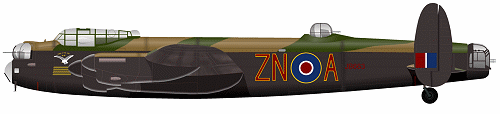
As a consequence of receiving this email Robertson can now be identified as 1821069 Sergeant (Air Gunner) George Smith Robertson RAF Volunteer Reserve, 106 Squadron. A Lancaster in the Squadron's markings is seen here.


Robertson was killed on 31st March 1944 in the great raid on Nuremberg.

... This would normally have been the moon stand-down period for the Main Force, but a raid to the distant target of Nuremberg was planned on the basis of an early forecast that there would be protective high cloud on the outward route, when the moon would be up, but that the target area would be clear for ground-marked bombing. A Meteorological Flight Mosquito carried out a reconnaissance and reported that the protective cloud was unlikely to be present and that there could be cloud over the target, but the raid was not cancelled.

795 aircraft were dispatched - 572 Lancasters, 214 Halifaxes and 9 Mosquitos. The German controller ignored all the diversions and assembled his fighters at 2 radio beacons which happened to be astride the route to Nuremberg. The first fighters appeared just before the bombers reached the Belgian border and a fierce battle in the moonlight lasted for the next hour. 82 bombers were lost on the outward route and near the target. The action was much reduced on the return flight, when most of the German fighters had to land, but 95 bombers were lost in all - 64 Lancasters and 31 Halifaxes, 11.9 per cent of the force dispatched. It was the biggest Bomber Command loss of the war.


Tuesday, 14 September 2010

A death in the Battle of the Atlantic


It's ridiculous how memorials keep turning up! Recently the church at Lindal in Furness has been opening every Wednesday morning where an excellent exhibition of local history has been displayed, mostly about the many mines that were established around the village in the nineteenth century to win the haematite ore that lay in the local limestone. I took Tez and the Big fella round a couple of weeks ago and another small memorial emerged. We also got an excellent photo of the church's Great War memorial, very difficult to photograph.

This rather heavily gothic lacquered brass plaque lists 20 village men by the year in which they died. It is unsigned.

Below the pulpit there is a further memorial in the shape of a small oak table.


In the centre of the table is a dedicatory plaque ... 


In Memory Of
Herbert Harrison
Aged 21
Who Lost His Life In The
Battle Of The Atlantic
8th June 1941

Herbert was the son of Wilfred James & Gertrude Harrison of Lindal. He was serving as Fourth Engineer on the MV (Motor Vessel) Adda, 7186 tons, when the ship was torpedoed at 04.42 hrs about 100 miles SSW of Freetown, Sierra Leone. Adda was dispersed to West Africa from convoy OB 323 en route from Liverpool to the USA.


Seven crew and three passengers were lost, 414 souls saved by HMS Cyclamen. 


Adda was the seventeenth of twenty one vessels sunk by the type IX B U 107 sailing out of Lorient while under the command of Gunther Hessler, the son in law of Grand Admiral Doenitz. The patrol in which Adda was lost was the most successful of all U Boat patrols of the war. Hessler was awarded The Knight's Cross.


U107 was eventually sunk in the Bay of Biscay west of La Rochelle on 18 August 1944 by a Sunderland aircraft of 201 Squadron.

Howard Martin has emailed with details of a Cartmel man who was also lost to the U107 - here

Thursday, 8 July 2010

Skelton

Sometimes I am truly amazed at the number of memorials that exist in the smallest of communities. Today I had a drive up to the hidden villages lying between the Eden and the hills of Lakeland north west of Penrith; a landscape of gently rolling farmland, leafy lanes and dispersed farming communities. In amongst these is a scatter of wonderful old churches and chapels. Skelton is one such.


The church of St Michael with its 14th century tower lies at the edge of the village. It is approached through a lych gate, itself a memorial commemorating the men of the village who died in the Great War. Shame about the plastic container!


The names of the men are carved on the sandstone base.


A further memorial in the form of a stock graveyard cross can be seen to the left of the church tower interestingly using the dates 1914 - 1918. The names are again inscribed together with the dedication...
'They died in War that we might live in Peace'.


Inside the church are two hand drawn rolls of honour. The earlier one listing all from the village who served and died in the European War was drawn by Irwin Walker in March 1921. He did not serve but being the son of a farm labourer he may have been exempt.


The central detail is beautifully drawn.


The second roll, drawn by RF Allinson in September 1949, lists those from the Second World War and includes seven women, reflecting the totality of the nation's engagement in the conflict where the women's services were so central to the national effort.


At the bottom of the nave, beneath the organ, is an oak screen that appears to have no purpose. Was it originally elsewhere in the village? The central panel lists the dead of 1939-45.


On the north wall of the nave is a spectacular plaque bearing the arms of the Cowper family and dedicated to the life and Great War service of Lt Colonel Malcolm Gordon Cowper. He joined the East Yorkshires from The Buffs as a 22 year old subaltern in 1898 and led the 6th (Service) Battalion thro' all of its battles in Gallipoli, France & Flanders between 1915-18.

The places named here are long forgotten by the vast majority of people but in the post 1918 years they would have been familiar to all, dark names resonant with death and heroism.


To find so many memorials in such a small, quiet community is indicative of the huge emotional impact of the world wars of the twentieth century. It is something I can only imagine, at best emotionally reconstruct from the echoes I felt as a child. I have just been watching the 70th anniversary celebrations of the Battle of Britain on TV and an Air Marshall observed that to young people that conflict is as remote as Trafalgar or Agincourt. Perhaps so, but it is sobering to contemplate the effort that places such as Skelton made to put the memory of Great Events in the ancient continuum of English history.

Deeply moving.

Sunday, 14 March 2010

A glimpse of Staveley in Cartmel

I have favourite places. A seat in the corner of the churchyard of St Mary's at Staveley in Cartmel is one of them. It is a wonderful place of quiet above the busy A590. The church itself was built as a chapelry after the suppression of Cartmel Priory though it has been subject to a couple of restorations and rebuilds since the 16th century.
The churchyard is particularly interesting for the variety of grave markers and tombstones quite a few of which commemorate high status families. One of these is the Ridehalgh family grave containing the mortal remains of three generations.


The family lived at Fell Foot, a substantial house on the shores of Lake Windermere now owned by the National Trust and run as a country park. The house and estate has a colourful history and passed through a number of hands until it was bought by Colonel George John Miller Ridehalgh, Lord of the Manor of Urmston, about 1859. He was a great benefactor in the district, an obsessive yachtsman and steam-boat enthusiast. Following his death the house was eventually sold in 1907 by his cousin, Wm Smith Ridehalgh, whereupon it was immediately demolished. The family moved to Broughton Lodge, closer to Cartmel. William Smith and his wife, Ethel, had just one son, George William. Born in 1916 he was serving as a 2nd Lt with the Welsh Guards when he died in 1940 to be buried in the family vault.


At some subsequent date his grieving widowed mother and his sisters erected a window in the north aisle of the church bearing figures of the archangels, Saints Gabriel & Raphael.


Oddly his name does not appear on two Rolls in the church but it does appear on the WW2 panel in the Lych gate, the village's primary war memorial. This gate, built from village oak, was constructed by the Wren family of Newby Bridge and unveiled in 1927


I have the following from friend Howard;

I remember old Mrs Ridehalgh living on her own at Broughton Lodge. We lived at Longlands Farm as kids and I remember her, a tiny old lady, peering through the steering wheel of a Vauxhall as she drove past the drive end. Her maiden name was Ravenscroft and she was renowned as a beauty, as the picture attached clearly shows.


The Ravenscrofts were a wealthy cotton trading family from Birkenhead and lived at Wood Broughton. Her brothers all fought in the war.

This is an extract from my Field Broughton book; "The third house in the picture is Broughton Grange, then owned by the Ravenscrofts. The four sons of the household were reported by the Cartmel Parish Magazine of October 1914 to have "all gained commissions". Martin joined the 3rd West Lancs Field Artillery and gained the Military Cross in 1917. Gordon and Harold were both Lieutenants in 4th Battalion Lancashire Fusiliers, which was at Barrow-in-Furness at the time. This was an Extra Reserve battalion which remained at Barrow until October 1916 when it was transferred to Barry in South Wales where it remained for the duration of hostilities. Gordon was promoted to captain in the summer of 1915 and ended the war with this rank in The King’s Own. The Ravenscroft brothers went out to France and both were in the "thick of it" during the Somme battles of 1916. Harold was reported to be home in August 1916 after being wounded in the right shoulder and Gordon was back on duty after being gassed.
The fourth brother, Trevor, was commissioned into the "Lancashire Huzzars" and joined the Royal Flying Corps in 1915. The January 1916 Cartmel Parish magazine said, "Trevor Ravenscroft of RFC has had a wonderful escape. He fell from a height of 1300 ft with his aeroplane, diving headlong into a tree near the Brooklands Aerodrome. He was roped into his seat so did not fall out. The machine went straight down through the tree, cutting off branches 6 inches thick as though they were matchwood. When the inhabitants of the house nearby rushed out they found the airman walking about with a bleeding nose. Stranger still, the house was that of Miss Egerton, St George's Hill, Byfleet, Weybridge, who was delighted to be of assistance to one from Cartmel Valley, even though his visit had been so abrupt! We are truly thankful that he is none the worse." He was later reported to have been many times over the German lines in his aeroplane."
.


Monday, 2 November 2009

Great Musgrave

Hidden away on the banks of the Eden at Great Musgrave is the magical church of St Theobald. There have been a number of churches around this site since at least the late twelfth century, and probably long before. Prior to 1248 the living was under the patronage of St Mary's, York.


There are a number of interesting memorials.

At the east end of the nave is a rough hewn table with two small dedicatory brasses on the edge commemorating members of the Fawcitt family.


The earlier of the two is;

In Memory of
Sub Lieut Bernard Fawcitt RNVR
Licata Sicily 10th July 1943

Temporary Sub Lt Fawcitt was killed, aged 20, in the invasion of Sicily - operation Husky - while serving aboard the Landing Ship Infantry HMS Princess Josephine Charlotte, a converted Belgian cross channel ferry.


Prior to Husky the ship had served as a commando carrier at St Nazaire. Young Fawcitt had been Mentioned in Dispatches sometime prior to his death, perhaps at St Nazaire. But why is he commemorated in this obscure corner of Cumbria? On the CWGC website his parents are named as Norman and Ethel Fawcitt, of Rothley, Leicestershire.

The Licata landings in which Fawcitt was killed was a predominantly American operation at the far western end of the landing beaches.

As well as the Fawcitt table there are two Great War memorials placed on the south wall of the nave. They still have their, probably, original brass candlesticks and vases on a shelf below, altogether a simple village war shrine.


The large Roll of Honour is painted on board and lists all of the parish who served 1914 - 19.

Sadly the paint used a lot of black pigment of a type that is now cracking and discolouring the gilding in which the names are painted. There is a nurse (her unit is I M N S R?) and guys from the district who served with the Canadian and Australian Expeditionary Forces.

Five men are listed on the Roll as having died but only four appear on an accompanying brass plaque produced by F Osborne & Co of London, church furnishers.

This plaque is identical in form to WW1 & WW2 memorials in the Methodist church at Ousby and, possibly, to one in the parish church there. Ousby church is now redundant, up for sale and permanently locked.

Wednesday, 26 August 2009

Another publication

Another publication listing names on war memorials has been kindly sent to me by the Matterdale Historical and Archaeological Society.

A labour of love, it describes the men whose names appear on the memorials at Matterdale, Greystoke, Patterdale, Penruddock and Watermillock from both world wars.


One of the great things about these locally produced publications is the anecdotal stories that often appear. The men are often remembered in their communities and stories remain in the memory of friends and family describing their lives and their fates. Such is the case here.

I found myself by the banks of Ullswater yesterday. What a beautiful place. I looked around the Salvin church at Patterdale and found two further memorials commemorating conflicts.

At the west end of the nave there is a White Ensign hanging from the wall.

An accompanying plaque explains that it flew on a despatch boat of HMS Lion, flagship of Sir David Beatty, at the Battle of Jutland. It was presented to the church by Commander Berry RN. Best look at my earlier posting about Beatty's flag at Flookburgh!

Set against the end wall of the nave, below the flag, is a rough wooden table.

It is an altar that was originally in the crypt of St Martin in the Fields, London. It was given to the Lakeland sculptress, Josephina de Vasconcelles who installed it in the chapel of a house in the Duddon Valley that was a refuge for disadvantaged youths. In 1970 it was dedicated by the Bishop of Carlisle as a memorial to all those killed in air crashes in the Lakeland fells from the outbreak of the second world war until today; over 500 people. At the millenium Josephina gave the altar to Patterdale church as a focus of pilgrimage for friends and relatives of the dead.